Light, Frame, Moment: How to Build Narrative in a Single Shot
As a travel and portrait photographer, my creative journey is a constant search for the perfect alignment of environment and timing. Recently, for my Director’s Fellowship in Documentary Practice: Visual Storytelling at the International Center of Photography (ICP) in New York, I was tasked with a foundational challenge: to isolate and master the three pillars of a phenomenal image—Light, Frame, and Moment. These three principles act as a compass for my lens. They are the difference between a snapshot and a photograph that resonates. When these elements align, they transform a mundane scene into something cinematic and enduring.
Here is a breakdown of how I navigated these principles for my latest assignment.
Light: Sculpting the Scene
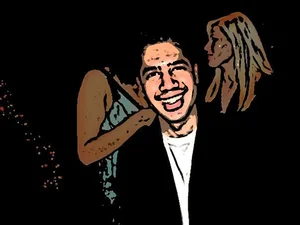
In photography, the play of light is paramount. I made this image in a subterranean speakeasy where the environment was defined by its near-total darkness. What struck me wasn’t just the direct glow from the LED menu, but how that light mixed with the ambient reflections hitting the walls. The light on the subjects’ faces isn't a typical cool digital glow; it’s a unique mixture of warm and "indica" color light. This specific palette creates a cinematic texture that transforms a public bar into a private, domestic sanctuary.

Creative Process Insight:
When working in low-light environments, don't just look at your primary source. Look at where that light lands and how it bounces. The most flattering and "cinematic" light often comes from the secondary reflection, which softens harsh digital glows and adds a layer of color complexity you can't get from a direct source.
Frame: Layering the Narrative
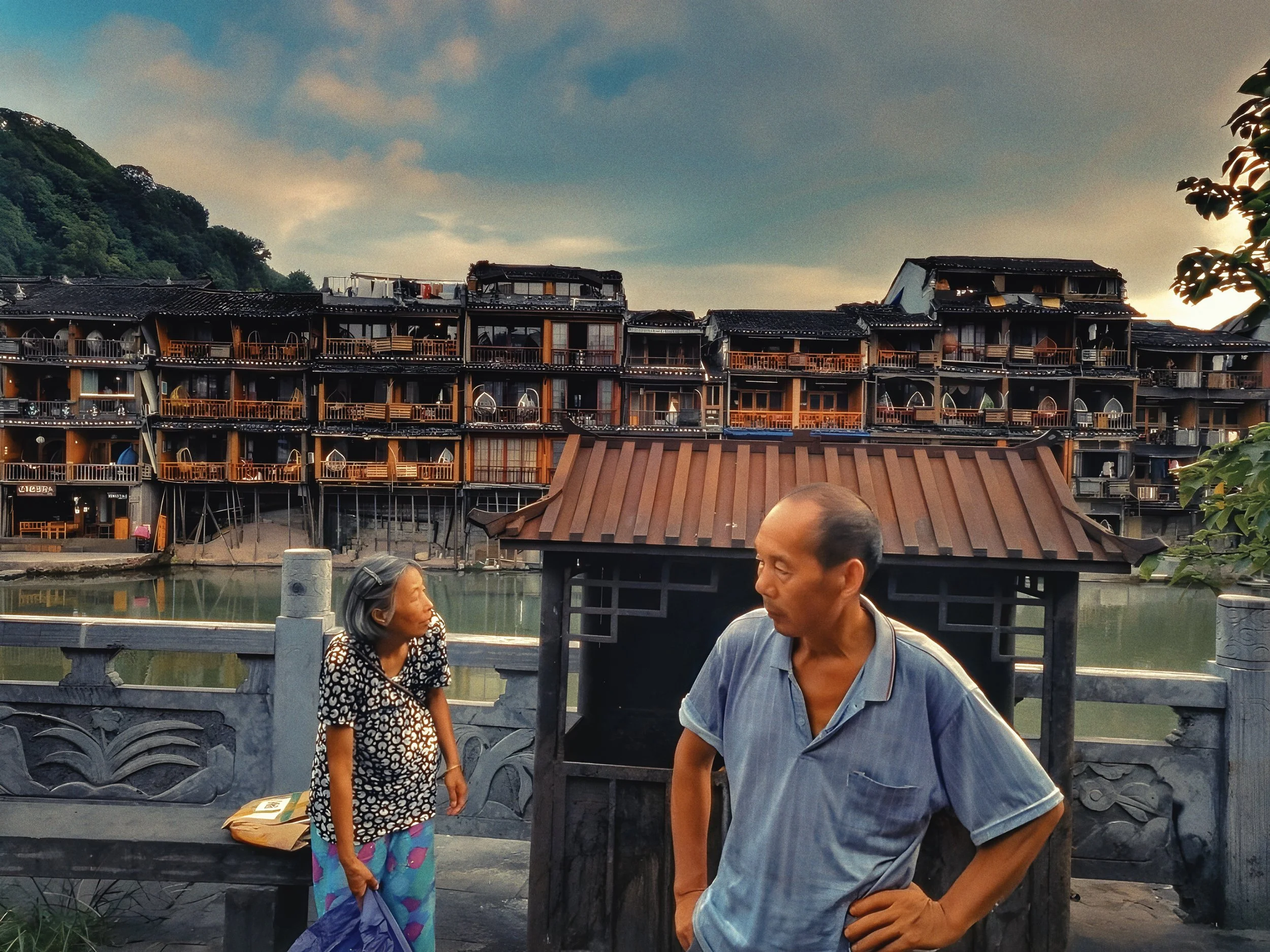
In this portrait, I used layers of architectural elements to create a series of nested frames. The man in the foreground is perfectly aligned within a wooden Chinese kiosk fixture; the patterned panels on either side act as a secondary frame for his shoulders, locking him into the composition. Behind him, the stone wall of the bridge creates a separate frame for the woman standing in the background. Finally, the residences across the lake serve as individual frames for the diverse lives within that neighborhood. By using these overlapping structures, the composition doesn't just isolate the subjects—it connects them to the architecture and suggests a narrative about how our identities are shaped by the spaces we inhabit.
Creative Process Insight:
Challenge yourself to find "frames within frames." Architectural elements like kiosks, bridges, or windows shouldn't just be part of the background; they should be used to compartmentalize the story. By layering your frames, you create a visual hierarchy that tells the viewer exactly where to look and in what order.
Moment: The Power of the Unexpected
For me, this image is about the power of the unexpected moment. We don't usually see someone navigating the city with a huge, freshly chopped tree trunk over their shoulder—especially not with this level of ease. What struck me most was the contradiction: the trunk is massive and clearly heavy, but the man isn't particularly young or muscular. He carries it with a casualness that makes it look like a routine task. Capturing this specific second was about that tension between the weight of the wood and the stillness of his posture. It’s a brief, surreal disruption of the everyday that forces you to stop and question the story behind his strength, where he could possibly be coming from, and where he’s heading with such a heavy load.

Creative Process Insight:
Capturing a "moment" requires a balance of anticipation and reaction. It’s about being present and allowing the scene to reveal itself, trusting that the right moment will manifest when least expected. To get a shot like this, you have to recognize the visual contradiction before it passes you. Focus on body language—often the story isn't in the action itself, but in how the subject's body reacts to an external force.
Final Thoughts for Visual Storytellers
Light, Frame, and Moment are individual tools, but they work in a shared language. When you learn to see them independently, you gain the ability to weave them together to create images that don't just show a subject, but tell a complete story.